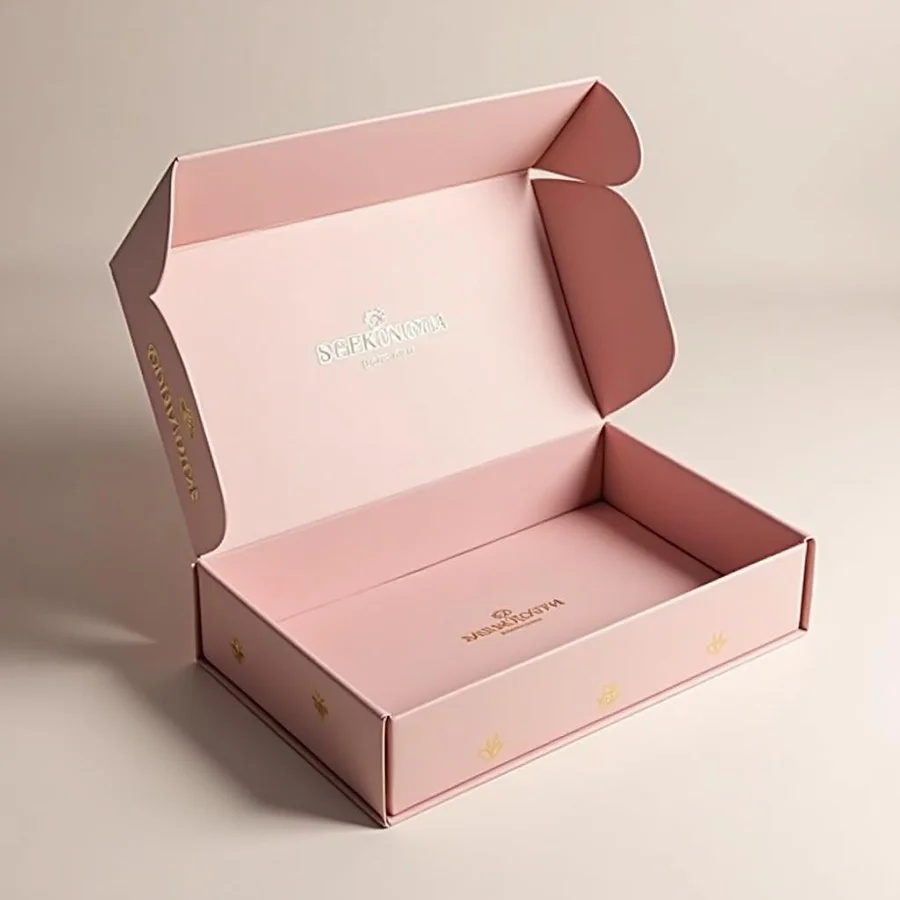
Many businesses across the UK face the same recurring issue: products reaching customers in good condition during shipping, while also keeping packaging costs under control and maintaining consistent presentation standards. This becomes more challenging when handling fragile items, subscription goods, cosmetics, electronics, or multi-item kits that require internal support to prevent movement during transit.
One practical solution that procurement teams and operations managers increasingly consider is structured mailer packaging with internal supports designed for stability and product separation.
Why inserts matter in mailer packaging
Standard mailer boxes work well for general shipping, but they can fall short when products shift inside the box. Inserts help address this by holding items in place, reducing movement, and lowering the chance of damage during handling and delivery.
Businesses evaluating packaging for operational efficiency often compare different formats such as mailer boxes, rigid boxes, custom sleeves, and tuck-end boxes. Among these, mailer boxes with inserts are frequently selected for e-commerce and subscription-based models because they combine straightforward assembly with added internal control.
For companies researching suitable options, solutions such as custom printed mailer boxes with inserts are often reviewed for their balance between structure and branding flexibility.
Key factors procurement teams evaluate
When selecting packaging suppliers, decision-makers usually focus on several practical considerations rather than surface-level appearance.
1. Material quality and durability
The strength of the board used in mailer boxes has a direct impact on product safety. Corrugated board is commonly preferred for shipping-heavy use cases, while lighter grades may be suitable for retail or subscription packaging. Inserts can be made from cardboard, foam, or molded pulp depending on product fragility and sustainability requirements.
2. Minimum order quantity (MOQ)
For growing businesses, MOQ plays a major role in supplier selection. Smaller batch capabilities allow for testing new packaging designs or seasonal campaigns without committing to large inventory volumes. Larger companies may prioritize economies of scale, but still require flexibility for product variations.
3. Lead times and production planning
Reliable lead times are essential for maintaining supply chain continuity. Procurement teams often assess whether suppliers can maintain consistent production schedules, especially during peak retail periods or promotional launches. Delays in packaging supply can directly affect fulfillment timelines.
4. Customisation options
Customisation goes beyond print design. It includes sizing, insert configuration, structural reinforcement, and finish options. Businesses often align packaging specifications with product dimensions to reduce shipping waste and improve operational efficiency. Packaging formats like rigid boxes may be selected for luxury goods, while mailer formats are typically used for direct-to-consumer shipping models.
A wide range of solutions such Printed Custom Mailer Boxes UK are evaluated by brands looking for adaptable printing and structural options that support different product categories.
Comparing packaging types for different use cases
Each packaging style serves a specific operational purpose:
- Mailer boxes: Commonly used for e-commerce orders, subscription boxes, and lightweight retail products. Easy to assemble and suitable for branded printing.
- Rigid boxes: Often selected for high-value items where presentation and structural strength are priorities.
- Custom sleeves: Used as an external layer to add branding over existing packaging formats.
- Tuck-end boxes: Frequently used in retail environments for cosmetics, pharmaceuticals, and small consumer goods.
Among these, mailer boxes with inserts are often chosen when businesses need both shipping durability and internal product organization within a single packaging format.
Supplier reliability and consistency
Beyond materials and design, supplier reliability remains a key decision factor. Businesses typically assess consistency in colour reproduction, structural accuracy, and repeat order uniformity. A reliable supplier should maintain production standards across multiple runs to avoid variations that affect inventory consistency.
Communication and technical support also play a role, especially when businesses are developing packaging for new product lines or entering different retail channels. Clear specification handling reduces production errors and helps ensure packaging aligns with logistical requirements.
Final considerations before placing an order
Before committing to a packaging supplier, procurement teams often review sample prototypes, confirm structural testing results, and evaluate cost per unit across different order volumes. It is also common to compare shipping efficiency benefits gained through properly sized inserts, as these can reduce movement-related damage and returns.
Packaging decisions are rarely isolated; they connect directly to logistics, customer experience expectations, and long-term operational costs.
For businesses exploring structured packaging solutions with print flexibility and internal protection, requesting a detailed specification and quotation is typically the next practical step.




Leave a Reply