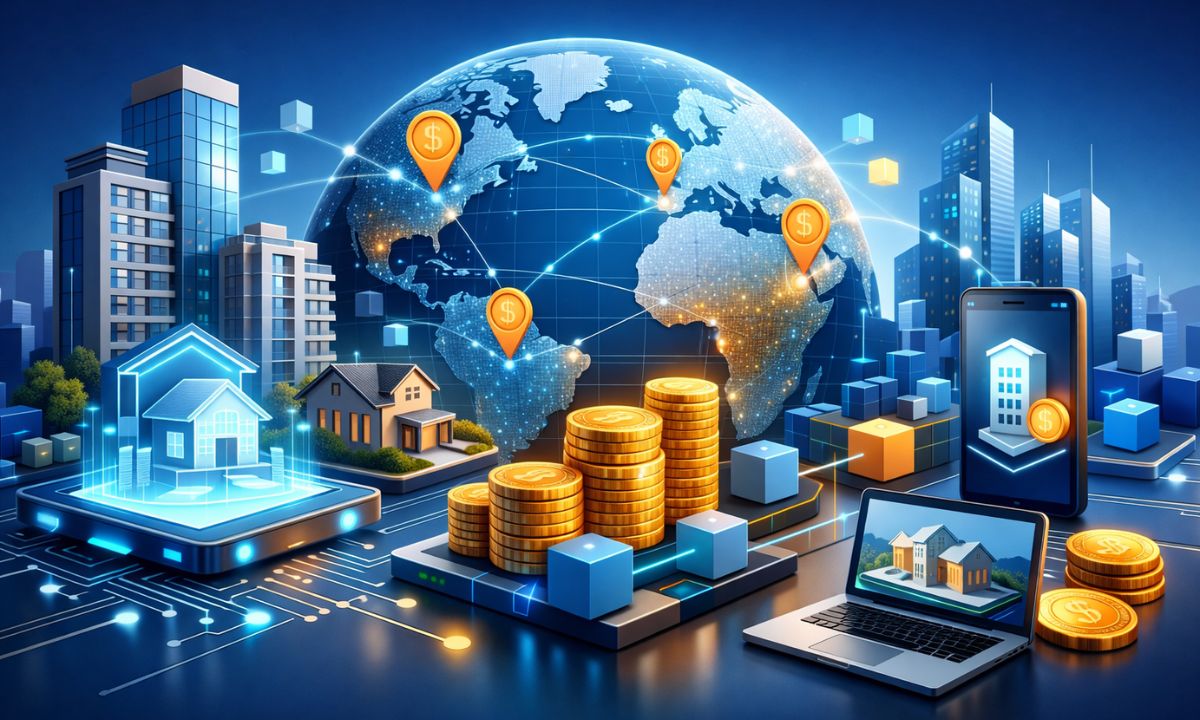
Real estate has long been considered one of the most dependable asset classes for wealth creation. Despite its popularity, property investment has traditionally been restricted by geography, high capital requirements, legal complexities, and lengthy transaction processes. Investors often face difficulties when attempting to purchase properties outside their own countries due to regulations, currency exchange issues, ownership restrictions, and administrative procedures.
The rise of blockchain technology has introduced a different approach to property ownership and investment. Through Real Estate Tokenization, property assets can be represented as digital tokens on a blockchain network. These tokens represent ownership rights, economic interests, or revenue shares connected to a real estate asset. As a result, investors from different parts of the world can participate in property investments without the conventional barriers associated with international real estate transactions.
Today, real estate tokenization development is becoming a significant area of interest among property developers, investment firms, real estate funds, and technology providers. By converting physical property assets into tradable digital tokens, the market is moving toward a more globally accessible investment environment where participation is no longer limited by location.
Understanding Real Estate Tokenization
Real Estate Tokenization refers to the process of converting ownership rights in a real estate asset into blockchain-based digital tokens. These tokens can represent full ownership, fractional ownership, profit-sharing rights, rental income participation, or other financial interests tied to a property.
Instead of purchasing an entire building or apartment, investors can buy a portion of the property through tokens. This creates opportunities for individuals and institutions that previously could not access high-value real estate markets.
The concept is attracting considerable attention from businesses seeking Real Estate Tokenization Services because it introduces a digital ownership model that aligns with modern investment preferences.
Why Traditional Real Estate Investments Remain Limited
Although real estate has generated significant returns for investors over the years, several challenges continue to limit market participation.
High Entry Costs
Many premium real estate assets require substantial capital. This prevents small and medium-sized investors from participating in attractive property opportunities.
Geographic Restrictions
Investing in foreign real estate often involves complex regulations, local laws, taxation structures, and documentation requirements.
Limited Liquidity
Selling a property can take weeks or months. Investors may struggle to convert their assets into cash quickly when needed.
Administrative Complexity
Property transfers involve lawyers, brokers, financial institutions, government authorities, and multiple verification processes.
Restricted Market Access
Many investors lack access to international real estate opportunities due to regulatory and operational barriers.
These limitations have encouraged property owners and investors to seek alternatives through Real Estate Tokenization Platform Development.
How Real Estate Tokenization Development Creates Borderless Investments
Real estate tokenization development introduces a framework where investors can participate in global property markets without the traditional restrictions associated with physical ownership.
Fractional Ownership Across Countries
Tokenized real estate allows a property to be divided into thousands or even millions of digital units. Investors from different countries can purchase these units according to their investment capacity.
For example, an investor in Asia may purchase tokens representing ownership in a commercial building located in Europe without physically visiting the property.
This approach broadens access to international real estate opportunities while reducing capital requirements.
Digital Access to Global Property Markets
Tokenized assets can be offered through blockchain-based investment platforms accessible through the internet.
Instead of relying on local real estate networks, investors can evaluate opportunities from different regions and participate in projects that align with their investment goals.
As a result, Real Estate Tokenization Development Services are gaining attention among companies seeking to attract international investment communities.
Reduced Transaction Barriers
Traditional cross-border property purchases involve numerous intermediaries and extensive documentation.
Tokenized real estate transactions are recorded on blockchain networks, reducing paperwork and simplifying ownership transfers.
Benefits include:
- Faster transaction processing
- Lower administrative expenses
- Simplified ownership records
- Easier asset transfers
- Reduced dependency on multiple intermediaries
These factors contribute to a more accessible global investment ecosystem.
The Role of Blockchain in Borderless Real Estate
Blockchain technology serves as the underlying infrastructure for tokenized property assets.
Every transaction is recorded within a distributed ledger that maintains ownership records and transaction histories.
Blockchain contributes to:
Ownership Verification
Investors can verify token ownership through blockchain records.
Transaction Recording
All token transfers are documented and time-stamped within the network.
Smart Contract Execution
Smart contracts automate predefined actions such as rental income distribution and ownership transfers.
Asset Tracking
Property-related transactions remain recorded throughout the asset’s lifecycle.
Because of these capabilities, many organizations are partnering with a Real Estate Tokenization Development company to establish secure property investment platforms.
Real Estate Asset Tokenization and Global Capital Formation
One of the most significant outcomes of real estate asset tokenization is its ability to connect global investors with property owners.
Property developers and asset managers often require substantial funding to complete large-scale projects. Tokenization provides access to a wider investor base beyond traditional financial institutions.
Expanded Investor Participation
Property owners can raise funds from investors located across multiple countries.
Improved Capital Availability
Developers gain access to broader funding opportunities without relying exclusively on banks or institutional lenders.
Diversified Investment Sources
Investments can originate from retail investors, accredited investors, family offices, and institutions worldwide.
This broader participation contributes to a more inclusive real estate investment environment.
Key Components of Real Estate Tokenization Platform Development
Successful tokenization platforms generally include several critical components.
Asset Tokenization Engine
This module converts property ownership interests into blockchain-based tokens.
Investor Management System
The system manages investor registrations, onboarding, and account administration.
Compliance Framework
Compliance tools help address jurisdiction-specific legal and regulatory requirements.
Smart Contract Infrastructure
Smart contracts automate token issuance, transfers, distributions, and governance functions.
Secondary Trading Environment
Some platforms support secondary market trading, allowing investors to buy and sell tokens after the initial offering.
Organizations investing in Real Estate Tokenization Platform Development often prioritize these capabilities to support efficient platform operations.
Benefits for International Investors
Borderless real estate investing offers multiple advantages for participants worldwide.
Portfolio Diversification
Investors can spread capital across multiple geographic regions rather than concentrating investments within a single market.
Access to Premium Assets
Tokenization provides access to commercial buildings, hotels, industrial facilities, residential developments, and mixed-use properties that may otherwise be inaccessible.
Lower Capital Requirements
Fractional ownership allows participation with smaller investment amounts.
Simplified Investment Process
Digital platforms centralize investment activities, reducing complexity compared to traditional cross-border transactions.
Potential Income Participation
Depending on the investment structure, investors may receive rental income distributions or profit-sharing benefits.
These advantages continue to attract attention toward Real Estate Tokenization Services globally.
How Smart Contracts Support Borderless Real Estate Investments
Smart contracts are self-executing programs operating on blockchain networks.
They automatically perform actions when predefined conditions are met.
Examples include:
- Token issuance
- Investor onboarding
- Dividend distributions
- Rental income allocation
- Ownership transfers
- Governance voting
Automation reduces operational delays while maintaining consistency across transactions.
For global investment ecosystems involving thousands of participants, smart contracts play a critical role in daily operations.
Regulatory Considerations for Global Tokenized Real Estate
While tokenization introduces new opportunities, regulatory compliance remains an important consideration.
Different countries have unique regulations regarding:
- Securities laws
- Property ownership
- Investor protection
- Tax reporting
- Anti-money laundering requirements
- Cross-border investment rules
A reputable Real Estate Tokenization company typically works with legal and compliance specialists to address these requirements during platform development and asset issuance.
Proper regulatory planning contributes to investor confidence and operational stability.
Industries Benefiting from Borderless Real Estate Tokenization
Several sectors are beginning to benefit from tokenized property investments.
Commercial Real Estate
Office buildings, retail centers, and business parks are increasingly being considered for tokenization.
Residential Properties
Apartment complexes and residential developments can attract global investors through fractional ownership models.
Hospitality Assets
Hotels, resorts, and vacation properties may utilize tokenized structures to access wider investment communities.
Industrial Facilities
Warehouses, logistics centers, and manufacturing properties are emerging as tokenization candidates.
Mixed-Use Developments
Large projects combining residential, commercial, and recreational spaces can attract diversified investor groups.
Challenges That Still Need Attention
Despite its growing adoption, tokenized real estate faces several challenges.
Regulatory Variations
Different legal frameworks create complexity for international offerings.
Investor Education
Many investors are still unfamiliar with blockchain-based property ownership structures.
Market Standardization
Industry-wide standards continue to evolve across jurisdictions.
Technology Integration
Existing property management systems may require integration with blockchain infrastructure.
Custody and Security
Secure management of digital assets remains an important consideration.
Addressing these challenges will likely contribute to broader adoption in the coming years.
The Future of Borderless Real Estate Investments
The concept of geographically unrestricted real estate investing is gaining momentum as blockchain adoption expands across financial markets.
Future developments may include:
- Greater institutional participation
- Expanded secondary market activity
- Increased regulatory clarity
- Integration with digital identity systems
- Automated compliance monitoring
- Enhanced investor access worldwide
As more organizations enter the tokenization sector, international property investment may become increasingly accessible to a broader range of investors.
Real Estate Tokenization Development company initiatives are expected to focus on creating investment ecosystems that support participation across multiple regions while maintaining compliance with local regulations.
Conclusion
Real estate ownership is entering a period where geographic boundaries are becoming less significant for investors. Through Real Estate Tokenization, property assets can be divided into digital ownership units and offered to participants worldwide. This approach reduces entry barriers, broadens investment access, simplifies ownership transfers, and creates new opportunities for capital formation across international markets. As blockchain adoption continues across the real estate sector, real estate tokenization development is likely to play a larger role in connecting global investors with property opportunities that were previously difficult to access. Organizations seeking to participate in this evolving market can benefit from experienced technology partners, and Blockchain App Factory provides Real Estate Tokenization Services for businesses looking to develop secure and compliant tokenized real estate solutions.



Leave a Reply