Real estate has traditionally depended on centralized registries, manual documentation, and multiple intermediaries to validate ownership and complete transactions. While this system has supported global property markets for decades, it is often slow, fragmented, and vulnerable to inefficiencies such as paperwork delays, title disputes, and high transaction costs.
Blockchain technology is introducing a fundamentally different model. By enabling decentralized, tamper-proof, and programmable records of ownership, blockchain is reshaping how real estate transactions are executed and how property ownership is recorded, transferred, and managed. This shift is not just about digitization it is about redefining the infrastructure of real estate itself.
Understanding Blockchain in Real Estate
Blockchain is a distributed ledger technology that records data across a network of computers in a way that ensures transparency, security, and immutability. In real estate, this means that property ownership records, transaction histories, and contractual agreements can be stored on-chain rather than in isolated government or institutional databases.
Each transaction is grouped into a block, cryptographically secured, and linked to previous records, forming an unchangeable chain of ownership history. This structure significantly reduces the risk of fraud, duplication, or unauthorized modifications. When applied to real estate, blockchain enables property data and ownership rights to become verifiable, traceable, and accessible in near real time.
1. Transforming Property Ownership Records
One of the most significant changes blockchain introduces is the modernization of property ownership records. In traditional systems, ownership data is maintained by centralized authorities such as land registries or municipal offices. These systems can be slow to update and often require manual verification.
Blockchain replaces this model with decentralized record-keeping, where ownership information is updated instantly and stored across multiple nodes. This ensures that property records are always synchronized, reducing discrepancies and improving data reliability. The result is a more transparent and secure system of ownership verification.
2. Enabling Secure and Transparent Transactions
Real estate transactions typically involve multiple steps, including negotiations, legal verification, escrow arrangements, and final settlement. Each stage introduces potential delays and risks. Blockchain streamlines this process by enabling secure, transparent transaction flows. Once conditions are met, transactions can be executed automatically through smart contracts. Smart contracts are self-executing programs that enforce agreements without intermediaries. In real estate, they can handle tasks such as:
- Ownership transfers
- Payment releases
- Contract enforcement
- Escrow management
This reduces reliance on intermediaries and significantly improves transaction efficiency.
3. Reducing Fraud and Title Disputes
Fraud and ownership disputes remain major challenges in global real estate markets. Issues such as forged documents, duplicate titles, and unclear ownership histories can lead to legal conflicts and financial losses. Blockchain addresses these issues through immutable record-keeping. Once ownership data is recorded on the blockchain, it cannot be altered or deleted without consensus from the network. This creates a reliable and verifiable chain of ownership history, making it much harder for fraudulent claims or conflicting records to emerge.
4. Introducing Fractional Ownership Models
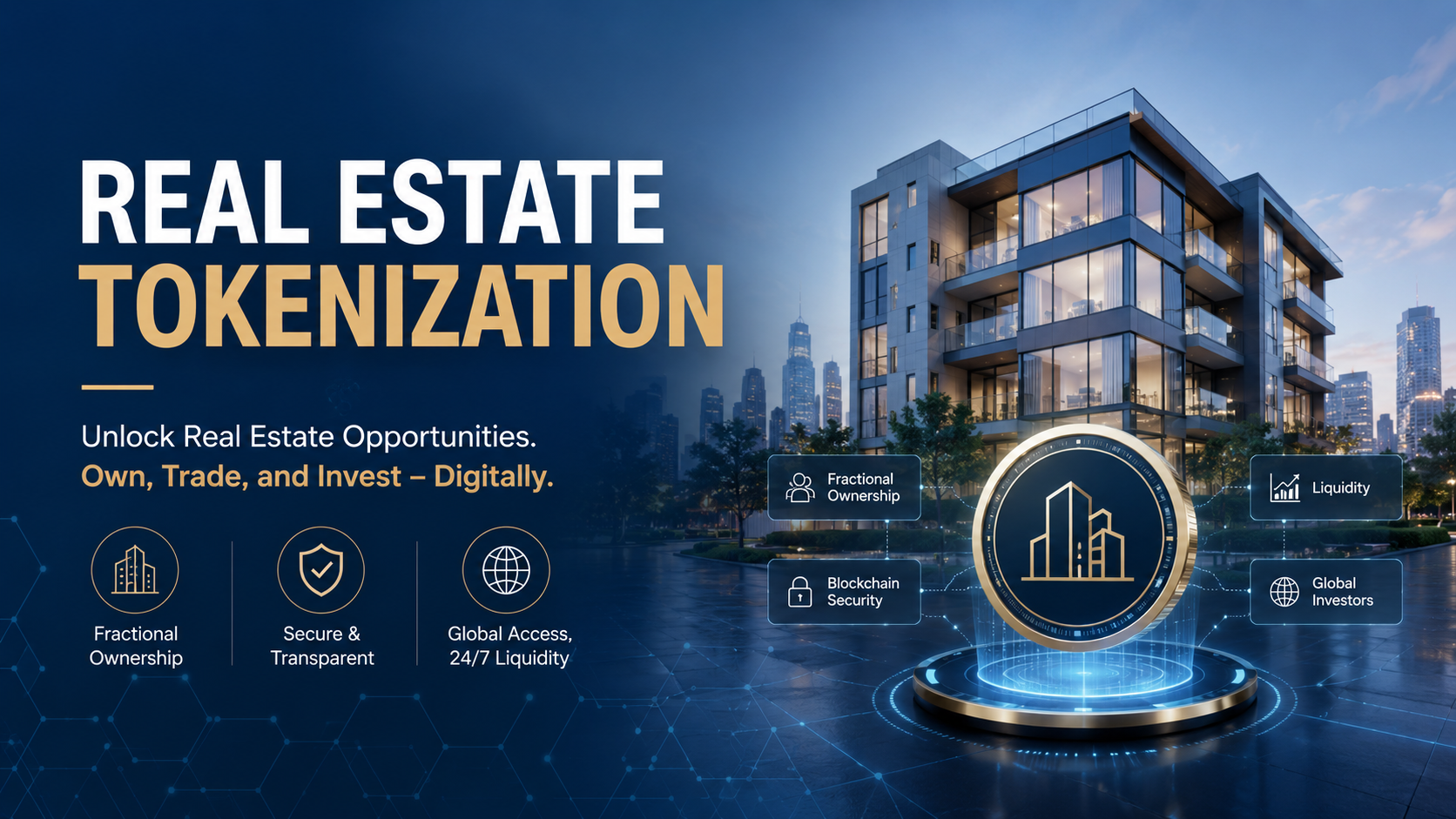
Blockchain enables real estate assets to be divided into digital tokens, each representing a fraction of ownership in a property. This process is known as real estate tokenization. Fractional ownership allows multiple investors to own portions of a single property, lowering entry barriers and expanding access to real estate investment opportunities. Instead of requiring large capital commitments, investors can purchase smaller shares, improving accessibility and diversification. For property owners, this also creates new ways to raise capital and monetize assets more efficiently.
5. Increasing Liquidity in Real Estate Markets
Real estate is traditionally one of the least liquid asset classes due to long sales cycles and high transaction costs. Blockchain-based tokenization introduces the possibility of secondary trading markets where property shares can be bought and sold more easily. This increases liquidity by allowing investors to exit positions without waiting for full property sales. Greater liquidity also enhances market efficiency and makes real estate more attractive as an investment asset class.
6. Automating Processes Through Smart Contracts
Smart contracts are one of the most transformative aspects of blockchain-based real estate systems. These automated protocols execute predefined rules without human intervention. In real estate, smart contracts can automate:
- Rental payments
- Ownership transfers
- Compliance checks
- Revenue distribution
- Lease agreements
This reduces administrative overhead, minimizes human error, and accelerates transaction timelines.
7. Enhancing Cross-Border Real Estate Investment
Traditional international real estate investment is often complicated by regulatory differences, currency conversion issues, and banking restrictions. Blockchain simplifies cross-border transactions by providing a standardized digital framework for ownership and transfer. Investors can participate in global real estate markets more easily, subject to regulatory compliance. This expands capital access for property owners and increases investment opportunities for global participants.
8. Improving Transparency and Regulatory Compliance
Blockchain provides real-time visibility into transaction histories and ownership structures. This transparency benefits regulators, investors, and property owners alike. Regulatory compliance processes such as KYC (Know Your Customer) and AML (Anti-Money Laundering) can also be integrated directly into blockchain-based systems. This ensures that transactions meet legal requirements while maintaining efficiency. Improved transparency reduces risk and strengthens trust in real estate markets.
Challenges in Blockchain-Based Real Estate Systems
Despite its advantages, blockchain adoption in real estate faces several challenges:
Regulatory Uncertainty
Legal frameworks for blockchain-based property ownership vary across jurisdictions and are still evolving.
Integration with Legacy Systems
Many real estate markets still rely on traditional registries and paper-based documentation.
Technical Complexity
Implementing secure and scalable blockchain infrastructure requires specialized expertise.
Market Adoption Barriers
Stakeholders may be slow to adopt new systems due to lack of familiarity or trust in emerging technologies.
Addressing these challenges is essential for mainstream adoption.
Future Outlook of Blockchain in Real Estate
The future of real estate is increasingly aligned with blockchain-based infrastructure. As technology matures and regulatory clarity improves, blockchain is expected to become a foundational layer for property ownership systems.
Emerging trends include:
- Fully digital land registries
- Tokenized real estate investment platforms
- Integration with decentralized finance (DeFi)
- AI-driven property valuation systems
- Global real estate trading ecosystems
Over time, real estate may evolve into a more liquid, transparent, and programmable asset class.
Conclusion
Blockchain is fundamentally transforming how real estate transactions and ownership structures operate. By introducing decentralized record-keeping, smart contract automation, fractional ownership, and enhanced transparency, it addresses many inefficiencies in traditional property systems. For investors, developers, and property owners, blockchain offers a more efficient and accessible framework for managing real estate assets. As adoption continues to grow, it is likely to redefine global property markets, making them more transparent, liquid, and digitally connected than ever before.





Leave a Reply