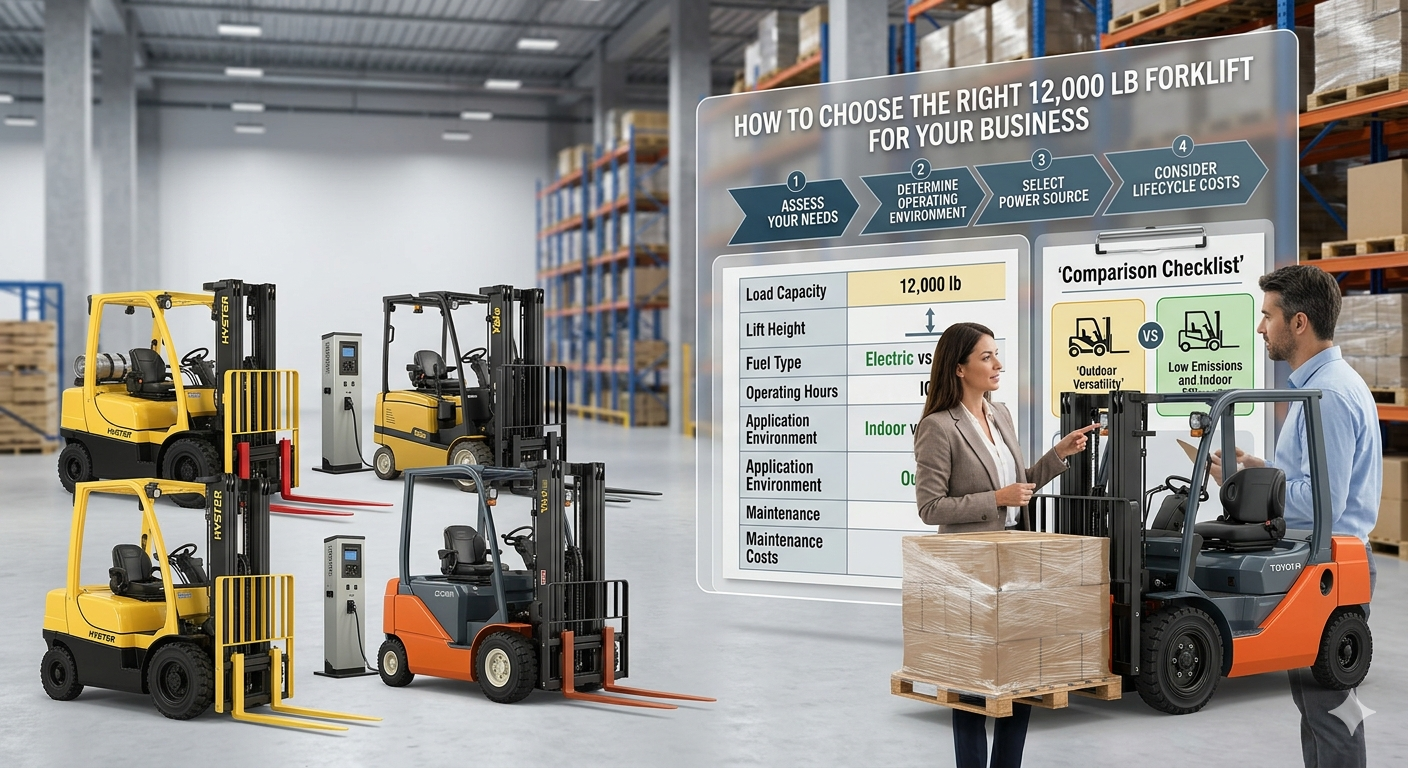
Selecting the right forklift is an important decision for any business involved in warehousing, manufacturing, construction, logistics, or material handling. The equipment you choose can directly affect productivity, workplace safety, and operating costs. For companies that regularly move heavy materials, a 12000 lb forklift offers the lifting capacity needed to handle demanding tasks while maintaining efficiency. However, not every forklift is suitable for every application. Understanding the key factors involved in selecting the right machine can help businesses make a smart investment.
A properly chosen forklift can improve workflow, reduce downtime, and support long-term operational success.
Why a 12000 lb Forklift Is Popular in Industrial Operations
A 12000 lb forklift fills the gap between standard warehouse forklifts and larger heavy-capacity machines. It provides substantial lifting power while remaining versatile enough for a variety of industrial applications.
Businesses commonly use these forklifts for:
- Manufacturing operations
- Building material handling
- Steel and metal fabrication
- Lumber yards
- Distribution centers
- Construction projects
Industry reports show that properly matched material handling equipment can improve operational efficiency by more than 20%, making forklift selection a critical business decision.
Assess Your Lifting Requirements
Before purchasing or renting a forklift, businesses should evaluate their actual lifting needs.
Determine Average Load Weight
Start by identifying the weight of the materials your team handles daily. While a forklift may have a 12,000-pound capacity, understanding average and maximum load weights ensures you select equipment that can safely perform required tasks.
Consider Future Growth
Many companies choose equipment based solely on current needs. However, future expansion may increase material handling requirements.
A 12000 lb forklift can provide flexibility for growing operations that expect to handle heavier loads over time.
Evaluate Load Dimensions
The size and shape of loads are just as important as weight.
Long or oversized materials can affect load center calculations and reduce effective lifting capacity. Understanding your load dimensions helps ensure safe operation and proper equipment selection.
Consider Your Work Environment
The operating environment plays a major role in determining which forklift model is most suitable.
Indoor Applications
Warehouses and manufacturing facilities often benefit from forklifts designed for indoor use.
Advantages may include:
- Lower emissions
- Quieter operation
- Improved maneuverability
- Reduced fuel costs
Electric forklifts are becoming increasingly popular for indoor environments due to their efficiency and environmental benefits.
Outdoor Applications
Construction sites, lumber yards, and industrial facilities often require forklifts capable of operating on rough surfaces.
For outdoor use, businesses should look for:
- Pneumatic tires
- Strong traction
- Durable frames
- Weather-resistant components
Choosing a 12000 lb forklift designed for the intended environment improves both performance and longevity.
Choose the Right Power Source
Forklifts are available with several different power options.
Diesel-Powered Forklifts
Diesel models are commonly used for heavy-duty outdoor applications.
Benefits include:
- High power output
- Long operating hours
- Strong lifting performance
These forklifts are often preferred in construction and industrial environments.
Propane Forklifts
Propane-powered forklifts offer a balance between indoor and outdoor use.
Advantages include:
- Faster refueling
- Consistent performance
- Lower emissions than diesel
Many businesses choose propane forklifts for mixed-use operations.
Electric Forklifts
Electric forklifts continue to gain popularity due to advances in battery technology.
Benefits include:
- Reduced operating costs
- Quiet performance
- Zero direct emissions
- Lower maintenance requirements
Depending on your facility, an electric 12000 lb forklift may offer significant long-term savings.
Evaluate Lift Height Requirements
Not every forklift offers the same lifting capabilities.
Warehouse Storage Needs
Businesses with high storage racks should consider:
- Maximum lift height
- Mast configuration
- Visibility at elevated positions
Proper lift height selection improves storage efficiency and helps maximize warehouse space.
Ground-Level Operations
Some industries primarily move materials at ground level and may not require extended mast configurations.
Matching lift height capabilities to actual operational needs can help control equipment costs.
Prioritize Safety Features
Safety should be a major consideration when selecting any forklift.
According to the Occupational Safety and Health Administration (OSHA), forklift-related incidents result in thousands of workplace injuries annually. Choosing equipment with modern safety technologies can help reduce these risks.
Stability Systems
Advanced stability systems help reduce the risk of tip-over accidents when handling heavy loads.
Load Monitoring Technology
Load sensors notify operators when approaching safe lifting limits.
Visibility Enhancements
Modern forklifts may include:
- Rear-view cameras
- Warning alarms
- LED lighting systems
- Enhanced operator sightlines
These features contribute to safer operations and improved operator confidence.
Compare New and Used Equipment
Businesses often face the choice between purchasing new or used forklifts.
Advantages of New Forklifts
New equipment typically provides:
- Manufacturer warranties
- Latest technology
- Improved fuel efficiency
- Lower initial maintenance costs
For businesses planning long-term ownership, new forklifts often deliver greater reliability.
Advantages of Used Forklifts
Used equipment may offer:
- Lower purchase prices
- Faster return on investment
- Reduced capital expenditures
However, buyers should carefully inspect maintenance records and overall equipment condition before purchasing a used 12000 lb forklift.
Consider Maintenance and Service Support
Reliable maintenance support is essential for maximizing equipment performance.
Industry studies suggest that preventive maintenance can reduce equipment failures by up to 40%.
When evaluating suppliers, ask about:
- Service availability
- Replacement parts inventory
- Emergency repair support
- Preventive maintenance programs
Strong after-sale support helps keep forklifts operating efficiently while minimizing downtime.
Calculate Total Cost of Ownership
Purchase price is only one part of the overall investment.
Businesses should also consider:
- Fuel or electricity costs
- Maintenance expenses
- Tire replacement
- Operator training
- Insurance costs
- Service support
A lower-priced forklift may become more expensive over time if maintenance requirements are high or parts are difficult to obtain.
Evaluating total ownership costs helps ensure better long-term value.
Final Thoughts
Choosing the right 12000 lb forklift requires careful consideration of lifting requirements, work environments, power sources, safety features, maintenance support, and long-term operating costs. Taking the time to evaluate these factors helps businesses select equipment that improves productivity, supports workplace safety, and delivers dependable performance.
Whether operating a warehouse, construction site, manufacturing facility, or distribution center, the right forklift can become a valuable asset that supports business growth for years to come. By making an informed decision today, companies can maximize efficiency and achieve a stronger return on their equipment investment.