A well-designed kitchen is not complete without a properly organized pantry. In modern homes, a walk in pantry is no longer just a storage room; it is a functional space that improves cooking efficiency, reduces food waste, and keeps the kitchen visually clean. However, without proper planning, even a large pantry can become cluttered and difficult to manage. This is where effective
walk in pantry organization plays a crucial role.
In this article, we will explore practical strategies, design ideas, and expert-level organization techniques to help you transform your pantry into a highly efficient storage space.
Introduction to Walk in Pantry Organization
Walk in pantries are popular because they offer generous storage capacity and allow homeowners to keep kitchen counters free from clutter. But having extra space does not automatically mean better organization. In fact, larger pantries often become disorganized faster because items are placed without structure.
Walk in pantry organization focuses on creating a system where every item has a dedicated place, making it easier to find ingredients, track inventory, and maintain cleanliness. A well-organized pantry also saves time during cooking and helps avoid unnecessary duplicate purchases.
Why Walk in Pantry Organization Matters
Before implementing organization techniques, it is important to understand why it matters in the first place.
1. Improves Kitchen Efficiency
When everything is clearly labeled and stored in a logical order, meal preparation becomes faster and smoother. You do not waste time searching for spices, canned goods, or baking ingredients.
2. Reduces Food Waste
Poor organization often leads to forgotten items at the back of shelves. Proper arrangement ensures that older products are used first, reducing waste.
3. Maximizes Storage Space
Even a small walk in pantry can feel spacious when items are arranged vertically and categorized properly.
4. Enhances Cleanliness
A structured pantry is easier to clean and maintain. Spills and expired items are quickly noticed and addressed.
Planning Your Walk in Pantry Layout
A successful organization system starts with a good layout. Whether you are designing a new pantry or improving an existing one, planning is essential.
Zoning the Pantry Space
Divide your pantry into functional zones:
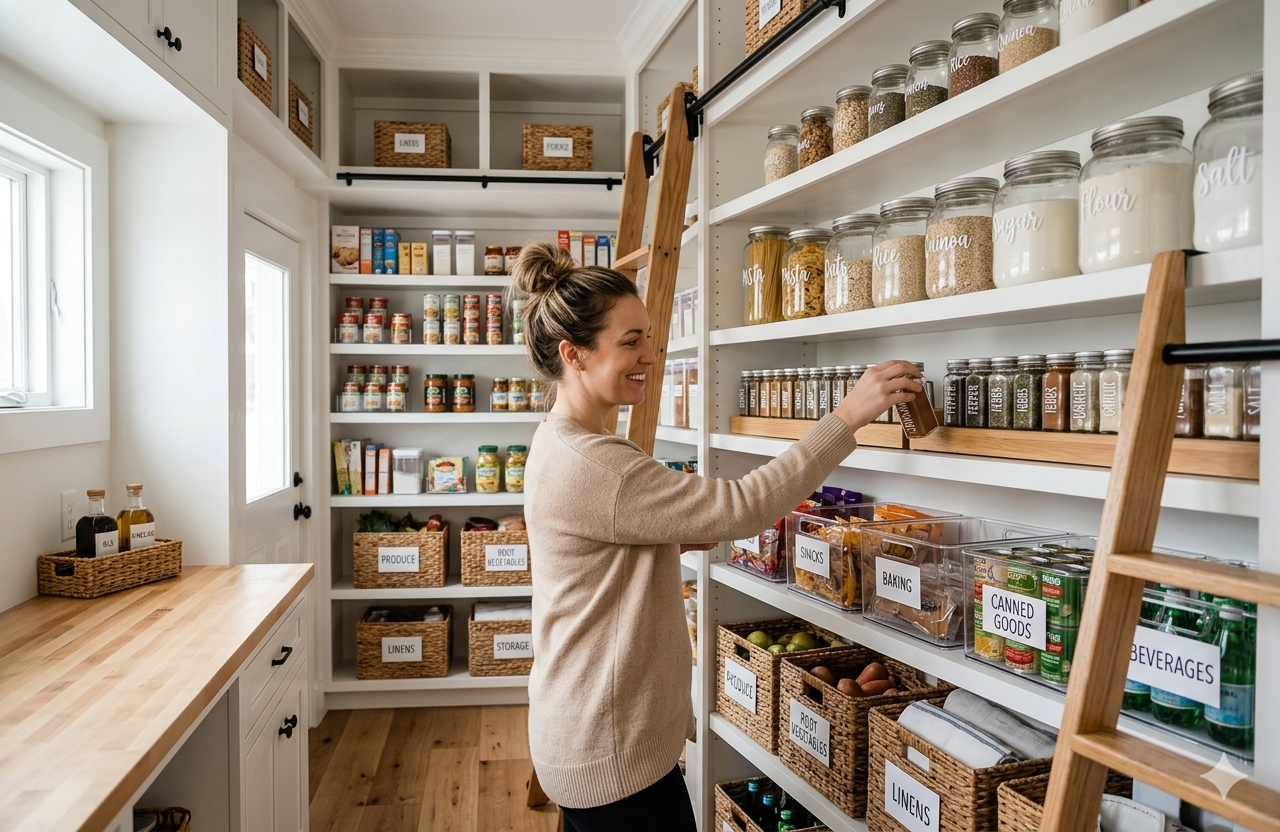
- Dry goods zone (rice, pasta, flour, cereals)
- Canned goods zone
- Snacks and beverages zone
- Baking supplies zone
- Cleaning supplies zone (if stored in pantry)
This zoning system is the foundation of effective walk in pantry organization.
Shelving Structure
Install adjustable shelves to accommodate different item sizes. Deep shelves are ideal for bulk storage, while shallow shelves help keep smaller items visible.
Vertical Utilization
Do not ignore vertical space. Tall shelves, hanging racks, and stackable containers help maximize every inch of the pantry.
Essential Storage Tools for Walk in Pantry Organization
Using the right storage tools can completely transform your pantry’s functionality.
Clear Storage Containers
Transparent containers allow you to see contents instantly, reducing the time spent searching for items. They are especially useful for flour, sugar, rice, and pasta.
Labeling Systems
Labels are a simple but powerful tool. They ensure that every item is returned to its proper place and help family members maintain the system.
Lazy Susans
Rotating trays are perfect for spices, sauces, and small bottles. They make hard-to-reach items easily accessible.
Stackable Bins
These are ideal for maximizing vertical space and grouping similar products together.
Door Racks
The inside of pantry doors can be used for storing spices, packets, and lightweight items, freeing up shelf space.
Step-by-Step Walk in Pantry Organization Process
To achieve long-term organization, follow a structured approach.
Step 1: Empty and Sort Everything
Start by removing all items from the pantry. Sort them into categories such as keep, discard, and donate. This helps eliminate expired or unused products.
Step 2: Clean the Space Thoroughly
Before reorganizing, clean shelves, corners, and storage areas. A clean base ensures a fresh start.
Step 3: Group Similar Items
Organize items into categories such as baking, snacks, breakfast items, and canned goods. Grouping makes it easier to maintain order.
Step 4: Assign Zones
Place each category in its designated zone. Frequently used items should be stored at eye level for easy access.
Step 5: Use Containers and Labels
Transfer loose items into clear containers and label everything clearly.
Step 6: Maintain Accessibility
Keep everyday items at the front and less frequently used items toward the back or higher shelves.
Smart Design Ideas for Walk in Pantry Organization
A well-designed pantry is not only functional but also visually appealing.
Open Shelving vs Closed Cabinets
Open shelves allow quick visibility and access, while closed cabinets create a cleaner visual appearance. A combination of both often works best.
Integrated Lighting
Good lighting is essential in pantry spaces. LED strip lights or motion-sensor lights improve visibility and make the space more user-friendly.
Pull-Out Drawers
Pull-out drawers are excellent for deep shelves. They prevent items from getting lost in the back and improve accessibility.
Adjustable Storage Systems
Modular shelving systems allow flexibility as your storage needs change over time.
Common Walk in Pantry Organization Mistakes to Avoid
Even with good intentions, many homeowners make mistakes that reduce efficiency.
Overcrowding Shelves
Packing too many items into one space makes it difficult to find things and leads to disorganization.
Ignoring Expiry Dates
Failing to check expiration dates regularly leads to waste and clutter.
Lack of Labeling
Without labels, items often get misplaced, breaking the entire organization system.
Poor Shelf Planning
Placing all items randomly instead of creating zones reduces efficiency and accessibility.
Maintenance Tips for Long-Term Organization
Organizing your pantry is not a one-time task; it requires regular upkeep.
Weekly Quick Check
Spend a few minutes each week checking for expired items and reorganizing misplaced products.
Monthly Deep Review
Once a month, reassess inventory and adjust storage as needed.
Seasonal Reset
Every few months, do a full pantry reset to maintain optimal organization.
Benefits of a Well-Organized Walk in Pantry
A properly maintained pantry offers long-term advantages:
- Faster meal preparation
- Reduced grocery costs
- Improved kitchen hygiene
- Better inventory management
- Stress-free cooking experience
These benefits make walk in pantry organization a valuable investment for any household.
Conclusion
A walk in pantry is a powerful feature in any modern kitchen, but its true value depends on how well it is organized. Effective
walk in pantry organization is not just about arranging items neatly; it is about creating a system that improves daily life.
By using proper zoning, smart storage tools, and consistent maintenance, you can transform your pantry into a highly efficient and visually appealing space. Whether you are starting from scratch or upgrading an existing setup, the key is to focus on functionality, accessibility, and simplicity.
A well-organized pantry saves time, reduces waste, and brings order to your kitchen—making everyday cooking a more enjoyable experience.
Post Views: 22



Leave a Reply